Mentoring 24 Teams at TinkHerHack 4.0, Sahrdaya
At TinkHerHack 4.0, hosted by TinkerHub SCET at Sahrdaya College of Engineering and Technology, I had the opportunity to mentor around 24 student teams building technology-driven ideas.
Across the 18-hour overnight hackathon, the teams moved through ideation, development, debugging, deployment and pitching. This article covers the recurring technical challenges, the pressure of the final hour and the lessons I took away as a mentor.
- Event
- TinkHerHack 4.0
- Date
- February 21, 2026
- Venue
- Sahrdaya College of Engineering and Technology
- Organised by
- TinkerHub SCET
- My role
- Mentor
- Mentoring scope
- Around 24 student teams
- Format
- Girls-only, 18-hour overnight hackathon
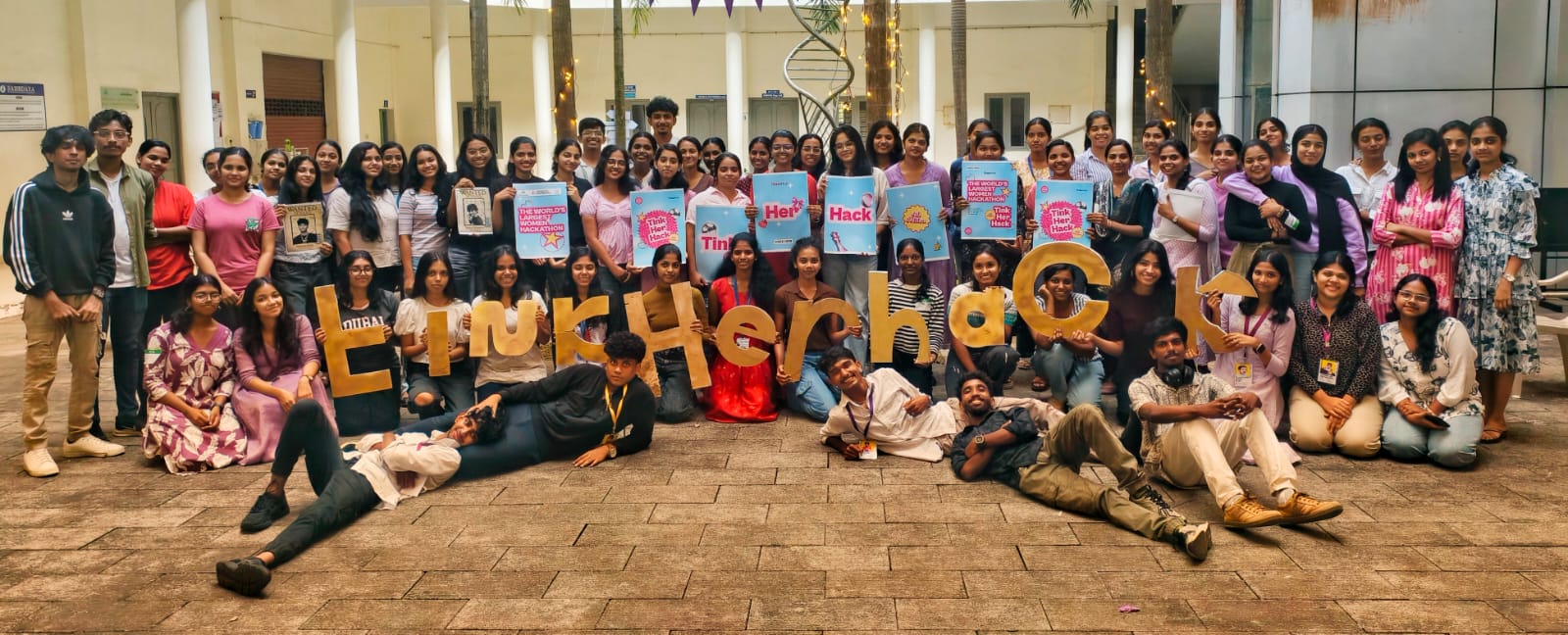
Mentoring at TinkHerHack 4.0
My role was to help teams reason through technical blockers without taking ownership of their projects. That meant asking the right questions, helping narrow a problem and suggesting a practical next step while leaving the final decisions and implementation with each team.
How I became a TinkHerHack mentor
It started with a simple suggestion: “Bro, you should mentor.” One moment I was casually scrolling; the next, I was preparing to move between 24 teams, different technology stacks and a constant stream of questions.
I did not expect the energy of the room or the intensity of the final hours, but that unpredictability became one of the most valuable parts of the experience.
A girls-only overnight build
TinkHerHack 4.0 created a space for women to build real products, deploy working systems, pitch their ideas and debug under pressure. The quality of the ideas and the confidence with which teams approached their projects stood on their own.
The event was not simply about participation. Teams had to make product decisions, work through technical trade-offs and present what they had built within a fixed deadline.
What mentoring around 24 teams looked like
I rotated between teams in short intervals. Every 10–15 minutes brought a new problem, a different stack and a new context to understand quickly.
The most common challenges were rarely solved by writing more code immediately. Teams often needed to step back, define the actual failure and decide which part of the system mattered most before the deadline.
- Ideas changing after development had already started
- Features that had worked earlier suddenly failing
- Expired API keys and environment configuration problems
- CORS errors and unfamiliar deployment behaviour
- Overcomplicated architectures that needed a smaller scope
- Broken links, repositories and submissions close to the deadline
My role was part debugging, part systems thinking and part keeping the conversation calm enough for the team to make a clear decision.
The pressure of the final hour
The final 60 minutes compressed every unresolved issue into one window. Teams were hosting projects, fixing deployment errors, checking repository access, repairing broken links and preparing submissions at the same time.
“The final hour was where prioritisation mattered more than adding one more feature.”
Servers slowed down, builds failed and commits moved quickly. Even so, the teams found ways to submit their work. That pressure was a practical lesson in deciding what to fix, what to simplify and what to leave for a later version.
What mentoring taught me
Mentoring at TinkHerHack 4.0 was not only about helping teams. It also strengthened the way I communicate technical ideas and analyse unfamiliar problems under time pressure.
- Explain technical choices without taking control of the project
- Understand an unfamiliar system quickly
- Separate the immediate blocker from lower-priority improvements
- Suggest architecture that matches the available time
- Keep teams focused when deployment pressure increases
The real highlight
The strongest part of the event was seeing a room full of women confidently ship products, present their decisions and work through technical uncertainty without backing down.
The experience reminded me that mentorship works best when it gives people enough direction to move forward while preserving their ownership of the work.
“When opportunity meets preparation, innovation happens—and when women lead that innovation, the future shifts.”