Presenting NeuroLearn at the Codex Community Meetup Kochi: Building the Future with AI
On June 27, 2026, I participated in the Codex Community Meetup – Kochi at Recca Club, Kochi, where I had the opportunity to present NeuroLearn alongside Aaron Thomas.
It was an evening filled with developers, builders, founders, researchers and people who were genuinely curious about how artificial intelligence is changing the way we design, build and think about software.
The meetup was not just about discussing tools. It was about bringing together people who are actively experimenting, learning and creating with technologies such as OpenAI Codex.
For me, the most memorable part was seeing how quickly conversations moved from ideas to real projects, practical demonstrations and possible collaborations.
- Event
- Codex Community Meetup – Kochi
- Date
- June 27, 2026
- Venue
- Recca Club, Kochi
- My role
- Participant and NeuroLearn presenter
- Project presented
- NeuroLearn with Aaron Thomas
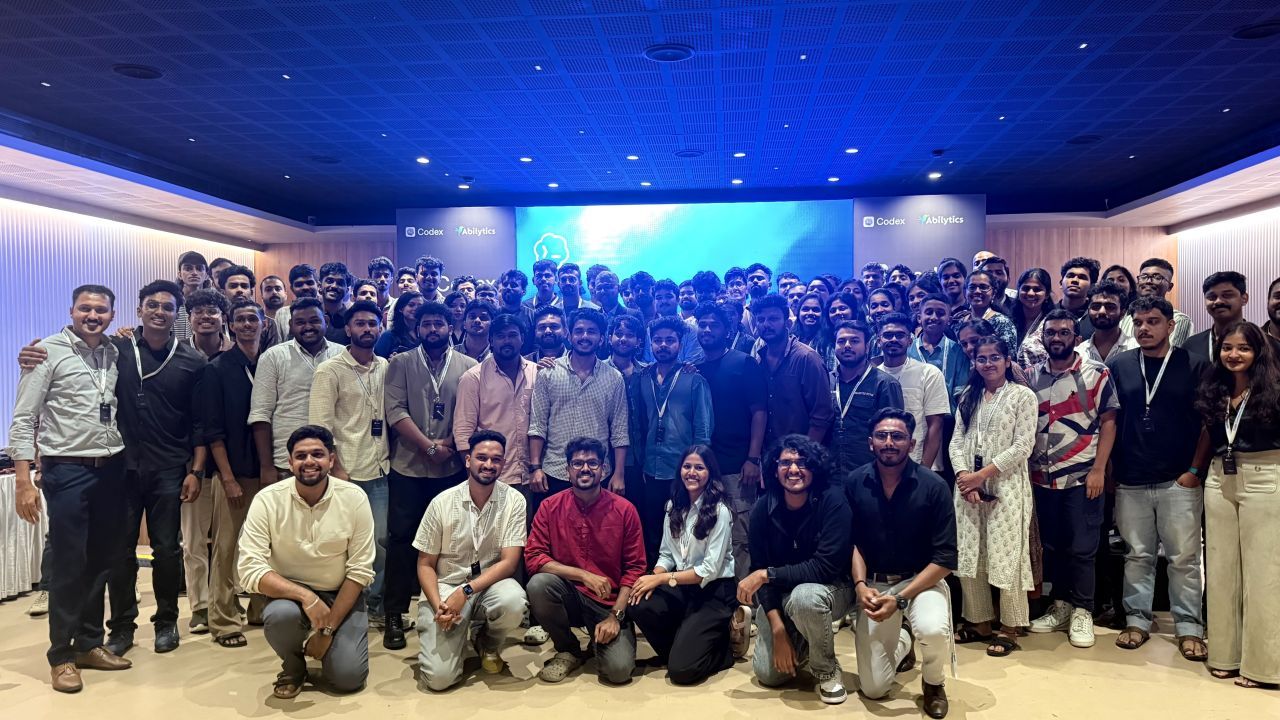
Bringing the Kochi AI community together
Kochi has a growing community of developers and technology enthusiasts who are actively exploring artificial intelligence, open-source software, product development and entrepreneurship.
The Codex Community Meetup created a space for these different groups to meet one another. Some participants were already building with AI. Others were exploring Codex for the first time. There were developers interested in improving their workflows, founders thinking about new products, researchers exploring emerging possibilities and students looking for a place to begin.
That diversity made the conversations more valuable. Instead of focusing only on what AI tools can generate, many of the discussions explored larger questions:
- How will AI change software development workflows?
- What skills will remain important for developers?
- How can Codex support rapid experimentation?
- How should builders evaluate AI-generated code?
- How can we move from demonstrations to useful products?
- What responsibilities come with building AI-assisted systems?
The future of software engineering will not be defined only by faster code generation. It will also depend on how well developers understand problems, design systems, review decisions and use AI responsibly.
More than a meetup about tools
One of the things I appreciated most about the event was that it did not feel like a product demonstration followed by a formal networking session. The room was filled with genuine curiosity.
People discussed the projects they were working on, the problems they were facing and the ways in which AI tools were changing their approach to development.
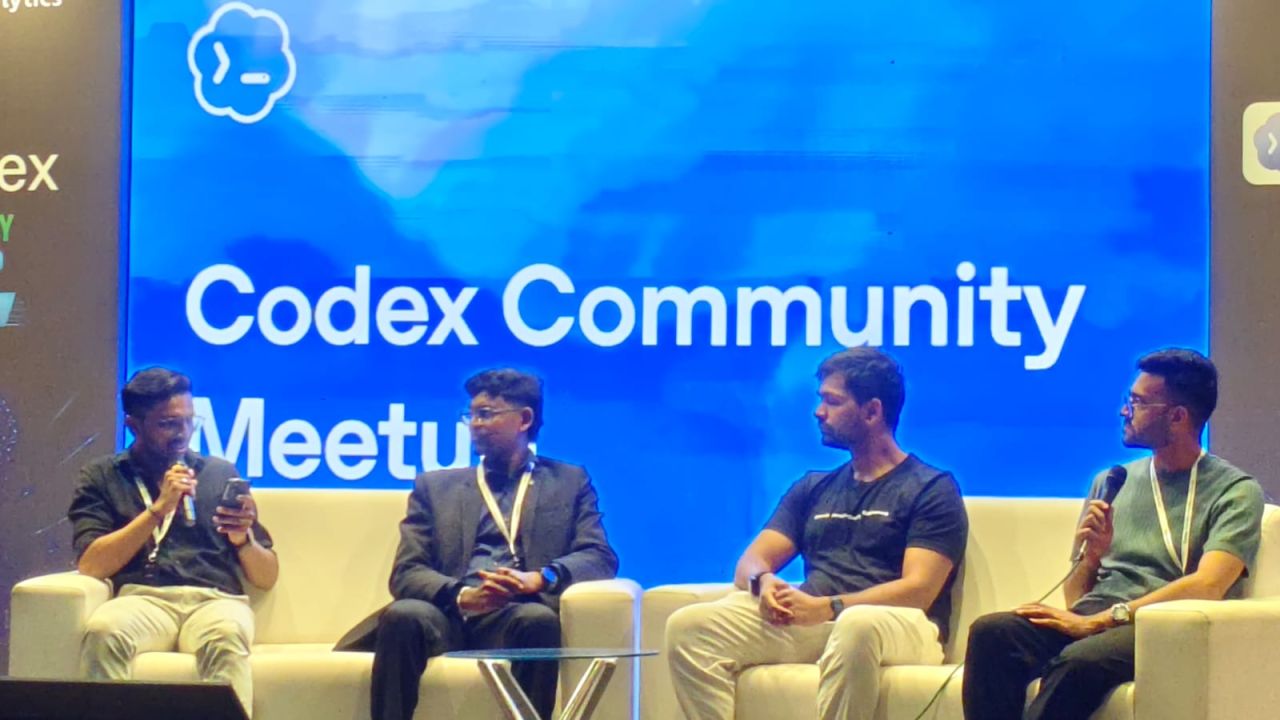
The Codex demonstrations were especially interesting because they showed different ways of working with an AI coding system. For some builders, Codex acted as a faster implementation assistant. For others, it helped analyse unfamiliar codebases, structure features, generate tests or explore alternative approaches.
The common lesson was that better results still require clear thinking. AI can improve execution speed, but the developer must still understand the product, constraints, architecture and expected outcome.
Presenting NeuroLearn
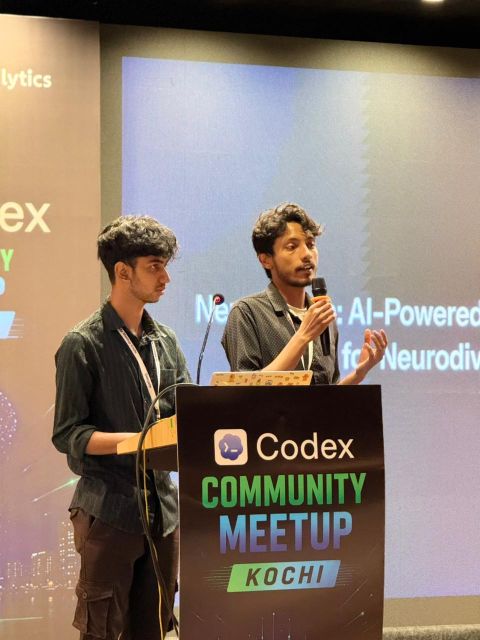
A particularly meaningful part of the meetup was presenting NeuroLearn with Aaron Thomas.
NeuroLearn is an AI-powered adaptive learning project focused on supporting neurodivergent learners through more personalised and accessible learning experiences.
Traditional learning platforms often expect every learner to understand information in the same way and at the same pace. However, learners may differ in how they process text, respond to explanations, maintain attention or demonstrate their understanding.
NeuroLearn explores how an educational platform can adapt its content, presentation and evaluation according to the learner’s needs. Instead of treating accessibility as an additional feature added at the end, NeuroLearn considers personalisation and accessibility as part of the learning experience itself.
During the meetup, we discussed the problem behind the project, the direction of the platform and the role AI could play in creating adaptive educational experiences.
The presentation also gave us an opportunity to receive reactions from builders with different technical and product backgrounds. Those conversations helped us think more carefully about the practical side of the project, including personalisation, responsible AI, accessibility and how an adaptive system should communicate its decisions.
Recognising the idea behind NeuroLearn
I also want to give a special mention to Robin Francis, who is part of the NeuroLearn team and originally came up with the idea behind the project.
A strong project often begins with someone recognising a problem that deserves more attention. Robin’s original idea created the foundation from which NeuroLearn began developing.
The project has since grown through collaboration, technical exploration and repeated discussions about how learning experiences can better support neurodivergent students. Presenting NeuroLearn at the meetup was therefore not only about showing a project. It was also about sharing the progress of an idea that has continued to evolve through teamwork.
Insights from speakers and contributors
The meetup benefited greatly from the perspectives shared by:
- Balesh Lakshminarayanan
- Chirag Oswal
- Praneeth C.
- Manoj Kumar V
- BASIL REJI
- Ajish Cherian
Their participation brought different experiences and viewpoints into the room. The discussions covered AI, software development, product building, community participation and the changing relationship between developers and intelligent development tools.
What made these contributions valuable was their practical nature. The conversation was not limited to predictions about the future. It also reflected what builders are already experiencing today: faster prototyping, changing development workflows, new questions about code quality and an increasing need for developers to think beyond implementation.
I am grateful to each of them for sharing their time and insights with the community.
The people behind the meetup
Community events are never built by one person. I am grateful to the people who co-organised the meetup:
- Viswanatha Kartha V
- Agnes Shibu
- Nandakumar B
- Devarsh R
- Robin Francis
- Syno Kuriakose
Their support was essential in shaping the event, coordinating the different parts of the meetup and creating a welcoming environment for everyone who attended.
I am also grateful to Abilytics, Inc. for supporting the event at Recca Club. From planning and communication to coordination on the day of the meetup, many small efforts came together to make the event possible.
The enthusiasm of the audience completed the experience. The questions, conversations and Codex demonstrations showed that Kochi has a community ready not only to learn about new technology, but also to experiment with it and build with it.
Part of a wider builder community
The meetup was connected to a much wider movement around AI-assisted software development and the communities forming around it.
The work being done by OpenAI, OpenAIDevs and developer communities around Codex has encouraged builders to explore new ways of designing and shipping software.
I would also like to acknowledge Gabriel Chua, Vaibhav Srivastav and Pauline P. Narvas, whose involvement in the wider developer ecosystem has helped strengthen conversations and communities around building with AI.
Local meetups become more meaningful when they are connected to a broader network of builders who openly share their experiments, lessons and ideas. At the same time, local communities add something unique: they make it possible to turn online conversations into direct collaboration between people who live, study and work in the same region.
What I took away from the meetup
AI tools are most valuable when the problem is clear
A powerful coding assistant cannot compensate for an unclear product direction. The builder still needs to define the user, the problem, the constraints and the desired result.
Developers are becoming system thinkers
As implementation becomes faster, developers need to spend more time thinking about architecture, security, user experience, accessibility and product decisions.
Communities accelerate learning
A builder can learn a tool alone, but conversations with other developers reveal approaches, mistakes and possibilities that may otherwise take much longer to discover.
Demonstrations make discussions practical
Seeing projects and workflows in action creates a different kind of conversation. People can move beyond abstract claims and discuss what actually worked, what failed and what should be improved.
The future of software engineering is collaborative
AI may change how code is produced, but meaningful products will still depend on collaboration between developers, designers, researchers, domain experts and communities.
This is only the beginning
The Codex Community Meetup Kochi reminded me why local technology communities matter. They provide a space where people can discover new tools, share unfinished ideas, demonstrate what they are building and find others who care about similar problems.
The meetup may have ended on June 27, but the conversations and connections formed there will continue. For me, this event was also another step in building a stronger community around Codex, AI-assisted development and practical product building in Kochi.
There is much more to explore, more projects to build and more conversations to organise. And yes, we are only getting started.
Connect and collaborate
I am always interested in connecting with developers, researchers, founders, educators and community organisers working on meaningful technology.
If you are exploring OpenAI Codex, AI for education, accessible learning or developer communities in Kerala, feel free to connect with me and follow my future updates.
I will continue sharing what I learn while building NeuroLearn, working with developer communities and experimenting with AI-assisted software development.
The Codex Community Meetup Kochi was not simply an event recap for me. It was a reminder that the future of technology is shaped not only by tools, but by the people willing to learn, build and share together.
“The future of technology is shaped not only by tools, but by the people willing to learn, build and share together.”